The international development project Nordic Energy Capital (NEC), led by the City of Vaasa, was launched last autumn.
The aim of the project is to build a future energy city together with residents, companies and experts. To support this goal, the project develops ways to produce, use and manage energy in a smarter, more sustainable and more predictable manner.
Partners in the project led by the City of Vaasa include the University of Vaasa, Vaasan Sähkö, EPV Energy, Merinova, the Vaasa 4H Association, as well as international partner cities. The project runs from 1 October 2025 to 31 March 2029.
The digital twin sheds light on how the energy system works
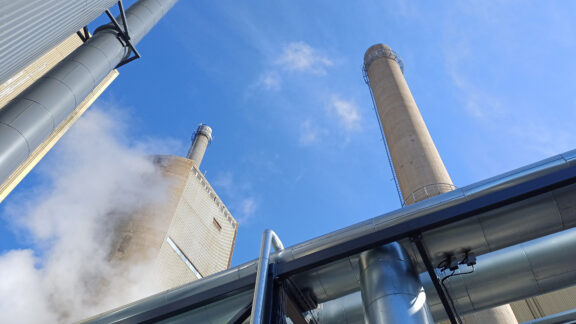
The project illustrates how electricity and heat function together as an efficient whole. To this end, a digital twin of the Vaskiluoto energy system will be created, including the power plant of Vaasan Voima, a subsidiary of EPV Energy. Currently, the plant accounts for more than half of Vaasa’s district heating production.
“The digital twin is a virtual model based on Vaasa’s district heating system, helping to understand how the system performs in different situations. Satellite data, open data sources and local measurement data are used in developing the model, providing a clear overall picture of heat demand and consumption,” says Mika Luoto, Head of Electricity Market Operations at EPV Energy.
The digital twin enables innovative solutions, such as simulations of planned high-temperature heat pumps. It can be used to analyse average heat profiles of industrial areas, especially in areas with high energy consumption, and to examine how these heat profiles can be integrated into the energy system.
In addition, the digital twin allows simulations of district heating operations and the utilisation of surplus heat from companies in the Vaskiluoto industrial area for electricity generation.
How does EPV participate in the NEC project?
EPV has a dual role in the project. EPV collaborates with the University of Vaasa, which is building a digital model of Vaasa’s energy system. EPV provides the university with the information and data required for developing the model.
At the same time, EPV is developing its own digital twin, which generates data for the University of Vaasa’s system and also enables the company to model the operation of its own district heating system.
According to Simon Björkman, Development Manager at EPV Energy, the project significantly supports the development of sector coupling in the Vaskiluoto area and the planning of future investments. The digital twin provides a wealth of new, usable data that benefits all parties involved in the project.
“Thanks to the project, our understanding continues to grow of how resources connected to the district heating network interact with each other, and what kind of impacts our operations have, for example, on emissions and heating costs. The digital twin helps us develop our district heating system toward lower emissions, thereby also supporting the City of Vaasa in achieving its carbon neutrality target,” Björkman says.
The Nordic Energy Capital project is co-funded by the European Union under the European Urban Initiative – Innovative Actions (EUI-IA) programme. The total project budget is EUR 5.4 million, of which the EU contribution is EUR 4.3 million.
Read more about the Nordic Energy Capital project on the City of Vaasa’s website.
More information:
Mika Luoto, Head of Electricity Market Operations, EPV Energy Ltd, tel. +358 504 131 356
Simon Björkman, Development Manager, EPV Energy Ltd, tel. +358 503 181 052