Storing heat and power
Finland’s largest thermal energy storage facility is in operation in Vaskiluoto, Vaasa, diversifying the region’s heat production now and in the future. The cavern serves as an optimisation tool within EPV’s energy generation portfolio.
One of Europe’s most advanced energy systems completed in Vaskiluoto
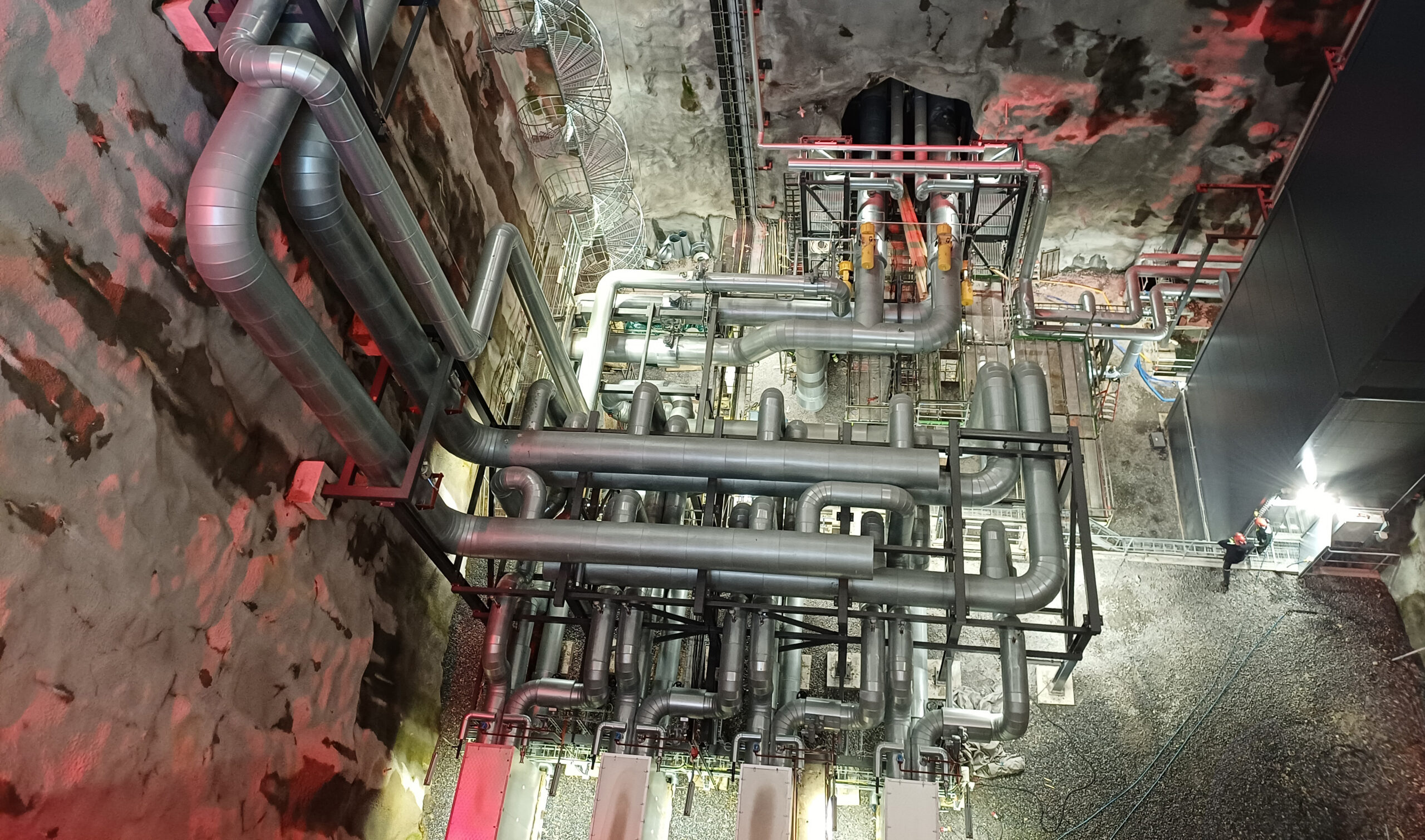
Vaasan Voima completed in September 2026 a significant energy system project at the Vaskiluoto power plant area, integrating thermal energy storage, electric boilers and highly efficient combined heat and power generation within a single site. The solution is exceptional by Finnish standards and is also a rare example on a European scale of a sector coupling system in which electricity, heat and energy storage operate seamlessly together.
As a result of the expansion, the thermal energy storage capacity has increased to approximately 17 gigawatt-hours (GWh), while its charging and discharging capacity has doubled. The integrated system now includes 220 megawatts (MW) of electric boiler capacity and the Vaskiluoto CHP power plant, all utilizing shared energy transmission infrastructure.
Finland's largest thermal energy storage facility in Vaskiluoto, Vaasa
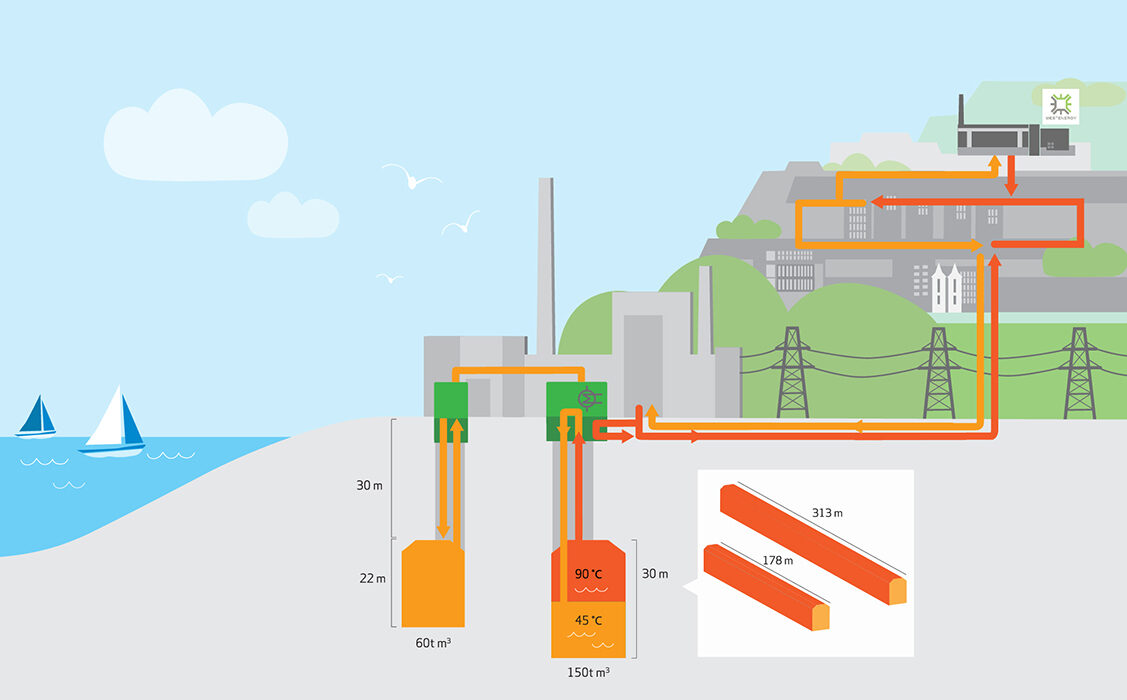
In 2020, Finland’s largest thermal energy storage facility was commissioned in Vaskiluoto, Vaasa, diversifying the region’s heat production both now and in the future. The storage facility is charged at the power plant, and heat is discharged from the energy storage facility into the district heating network.
At the time of commissioning, the thermal energy storage facility had a total volume of 210,000 m³ and a charging and discharging capacity of 100 MW. In the reference year, the thermal energy storage facility reduced EPV Energy’s coal use by a calculated 30% and brought flexibility to future energy production solutions.
The thermal energy storage facility was expanded through new investments in 2021 and 2023. As part of these projects, three new electric boilers were commissioned, increasing the storage capacity to 11 gigawatt-hours. The investments provided significantly more flexibility and storage resources for heat production, further reducing carbon dioxide emissions from production.
The third and most recent expansion project was completed in September 2026. As a result of the project, Vaskiluoto now has an exceptional thermal energy system on a Finnish scale and a rare European example of a sector coupling solution in which electricity, heat and storage systems work seamlessly together.
Following the expansion, the capacity of the thermal energy storage facility increased to approximately 17 gigawatt-hours, while its charging and discharging capacity doubled to 220 megawatts. The same system also includes 220 megawatts of electric boiler capacity and the Vaskiluoto CHP power plant, which share a common energy transmission infrastructure.
The investments in the Vaskiluoto thermal energy storage facility support low-emission energy production, strengthen security of supply and lay the foundation for a future energy system in which electricity, heat and various forms of energy storage work increasingly closely together. The technology built on site can also be upgraded and adapted for new uses. This makes it possible to connect other energy production projects to the storage facility, and the underground caverns can be heated using, for example, wind or solar power through electric boiler technology.
The underground caverns used as thermal energy storage were originally built in the 1970s for oil storage. The caverns remained in use until the late 1990s, when they were emptied and cleaned of oil. The caverns are located in Vaskiluoto, 30 metres below ground level.