
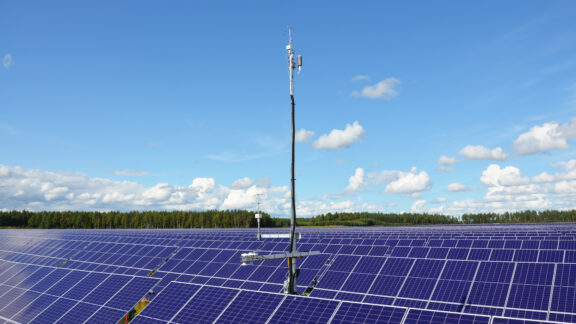
The AurinkoSuo research project has been under way since last year at the Heinineva solar power plant in Lapua and the Polunsuo peatland area in Karstula. The project collects research data on soil emissions and the climate impacts of solar power built on former peat production areas.
The project, co-funded by the European Union, started in January 2025 and will continue until the end of 2026. The project is led by the Finnish Meteorological Institute, with the University of Helsinki (Institute for Atmospheric and Earth System Research INAR and the Department of Forest Sciences) and Seinäjoki University of Applied Sciences as the other partners.
The project collects extensive information on soil impacts
The studies in the project are carried out using measurements and modelling. These methods are used, for example, to monitor the types of emissions generated from the peat soil beneath the solar panels and the type of ground vegetation that begins to develop over time.
EPV Aurinkovoima’s Heinineva solar power plant was selected as the project’s second study site because it is the first solar power plant in Finland to be established on a former peat production area.
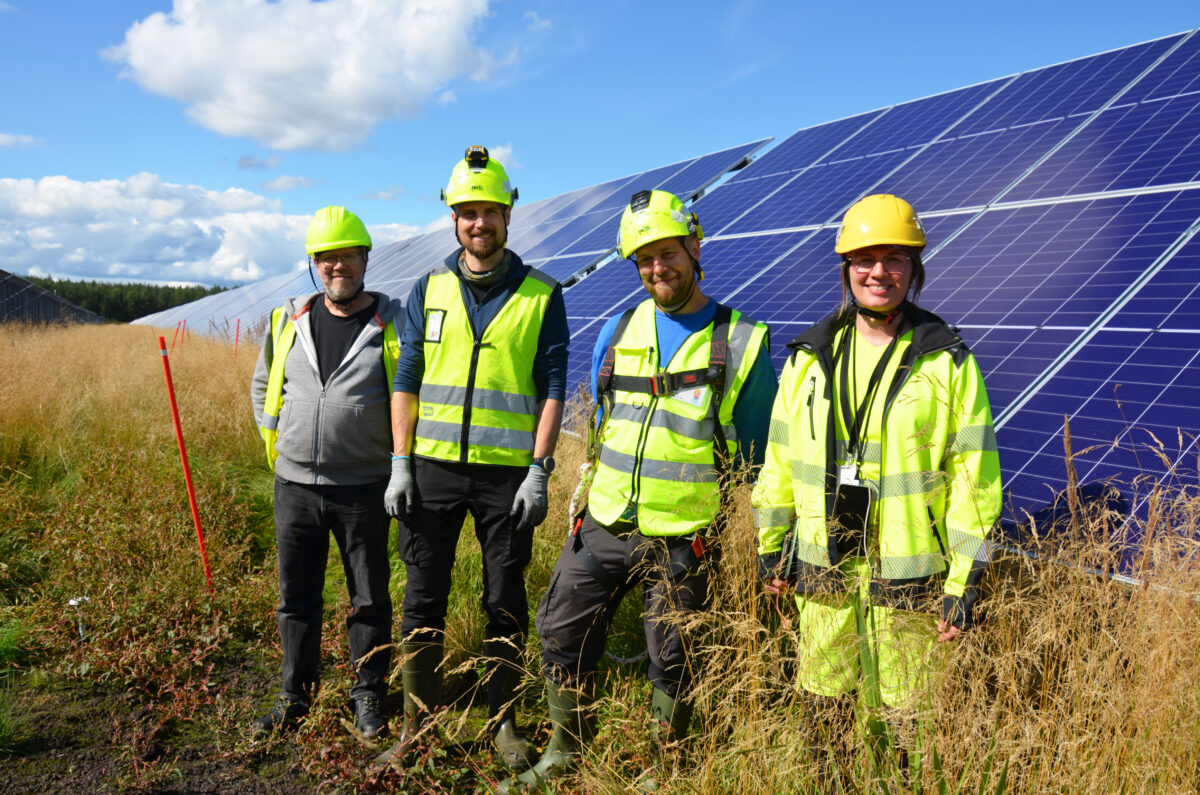
“Here at Heinineva, we can collect measurement results that have never before been obtained in a comparable environment. The measurements are used to refine the modelling carried out in the research project on how the structure of solar panels affects temperature, light conditions and soil moisture beneath and between the panels. Growing conditions affect the development of vegetation and, consequently, greenhouse gas emissions,” says Marja Kotakorpi, Project Planner at the Department of Forest Sciences at the University of Helsinki.
Measurements on the solar power plant’s study plots began approximately a year and a half ago, in June 2025. The measuring equipment is used to measure carbon dioxide, methane and nitrous oxide generated in the soil.
Peat layer thickness is reflected in the rate of vegetation growth
Although confirmed results and conclusions will be available later, preliminary observations have already been made in the Heinineva studies.
In particular, the amount of residual peat has affected the plots on which vegetation has developed and the rate at which it has developed during the measurement period. Species that have performed particularly well on the study plots include grey sedge, tufted hairgrass, reed grasses and rushes. Growth has been faster on plots with a thinner peat layer, and a greater number of plant species have also been observed on these plots.
“By raising the water level on the plots, it is possible to influence peat moisture and promote vegetation growth. This can reduce carbon dioxide and nitrous oxide emissions resulting from peat decomposition, although methane emissions often begin to increase as moisture levels rise. An essential aspect of the project is therefore that the measurement results allow us to assess soil emissions as a whole and their impacts,” Kotakorpi says.
The AurinkoSuo project will end at the end of this year. The measuring equipment used at Heinineva will remain on the study plots in the coming years, enabling comprehensive and comparable results to be obtained on soil emissions.
In the coming years, the development of the carbon balance in the measurement areas will be monitored, for example. Variations in temperature and precipitation affect greenhouse gas emissions, making it important to collect research data over a long period.
Research data for future solar power sites
The AurinkoSuo project is providing a wealth of new information on establishing solar power plants on peat production areas. The research results will help assess the development of emission levels, as well as what types of vegetation begin to grow in solar power areas and at what rate.
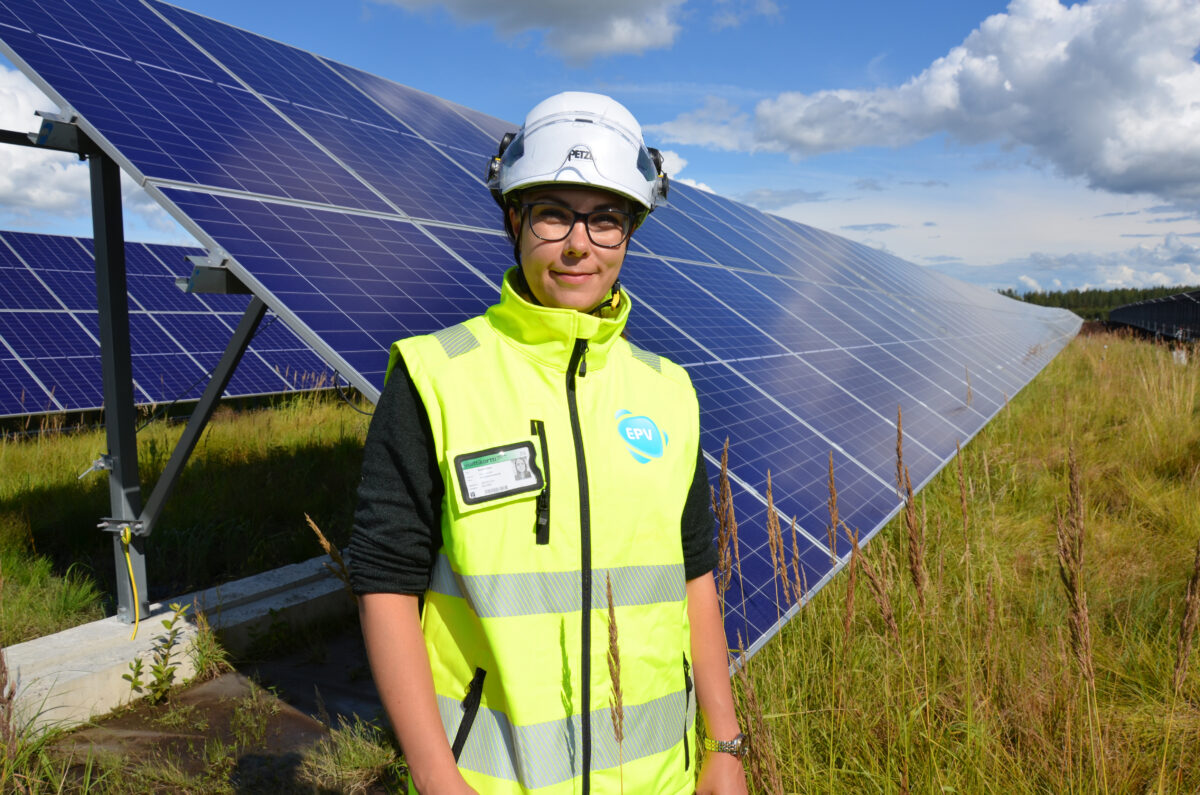
“Based on the results, when future solar power projects are established on peat production areas, it will already be possible at the planning stage to assess how factors such as panel structures, water level management and the promotion of vegetation can contribute to emissions management,” says Menna Luhtala, Area Development Manager at EPV Energy.
According to Luhtala, the observations made at Heinineva have been positive. The rate of vegetation growth has been influenced above all by soil characteristics, water management and the thickness of the peat layer.
“The development has been very positive compared with the bare peat field during the area’s peat production phase and the greenhouse gas emissions generated at that time. Vegetation in the area has developed rapidly, which has also contributed to the recovery of biodiversity. In addition, the area’s water management has been controlled using adjustable subsurface drainage to raise the water level. The aim has been to create even more favourable conditions for the development of the area’s natural values and biodiversity.”
Through the measurements carried out in the project, EPV Aurinkovoima obtains data for modelling and assessing solar power production, including through solar radiation measurements. The data collected can also be further processed and utilised in the planning of future power plant sites.
Research into the further use of peat production areas
Luhtala emphasises that it is important to conduct more similar measurement studies nationwide. Former peat production areas differ from one another in terms of many characteristics that affect vegetation development, water management and greenhouse gas emissions.
These differences include, for example, the soil seed bank and various peat properties, such as quality, nutrient content, degree of decomposition, density and thickness, as well as the area’s topography, drainage history and hydrological conditions. A broader body of research data from different sites will help assess which of the observed impacts are more widely applicable and which are highly site-specific.
However, the ongoing studies reinforce EPV Aurinkovoima’s view that the planning of the Heinineva solar power plant has been successful from the perspective of promoting biodiversity.
“The observations made in the project increase our confidence that the recovery of nature and carbon sequestration can be promoted on former peat production areas. The establishment of vegetation and other natural development in these areas play a key role in this, and through our own measures we can create the best possible conditions for this development. It is also great that, at the same time, we are contributing to the production of important new knowledge for the entire solar power sector.”
The project is part of EPV Energy’s biodiversity action programme
Each year, EPV implements one project to promote biodiversity as part of its action programme. The Group’s businesses take turns contributing to biodiversity through their own projects.
“Individual projects make our biodiversity work visible, but the continuous work carried out alongside them is equally important. We regularly review EPV’s different forms of energy production and projects and assess how biodiversity can be taken into account and promoted in each specific activity,” says Melina Kaihoniemi, Occupational Safety and Environmental Manager at EPV Energy.
EPV Alueverkko was responsible for the project carried out in 2025. In the project, which covered the Peräseinäjoki–Alavus–Kuortane–Alajärvi route in South Ostrobothnia, 50 old creosote-treated pole bases were removed and replaced with new pole bases treated with copper oil and salt preservatives. Read more about the 2025 project here.